Project Management & Consulting Services

BMWv provides expert advisory, technical assistance, and strategic planning services to ULBs, State Missions, and development partners. These services are built on deep domain expertise and policy understanding, enabling local bodies to institutionalize SWM systems and comply with SBM-U 2.0, Solid Waste Management Rules 2016, and related mandates. 

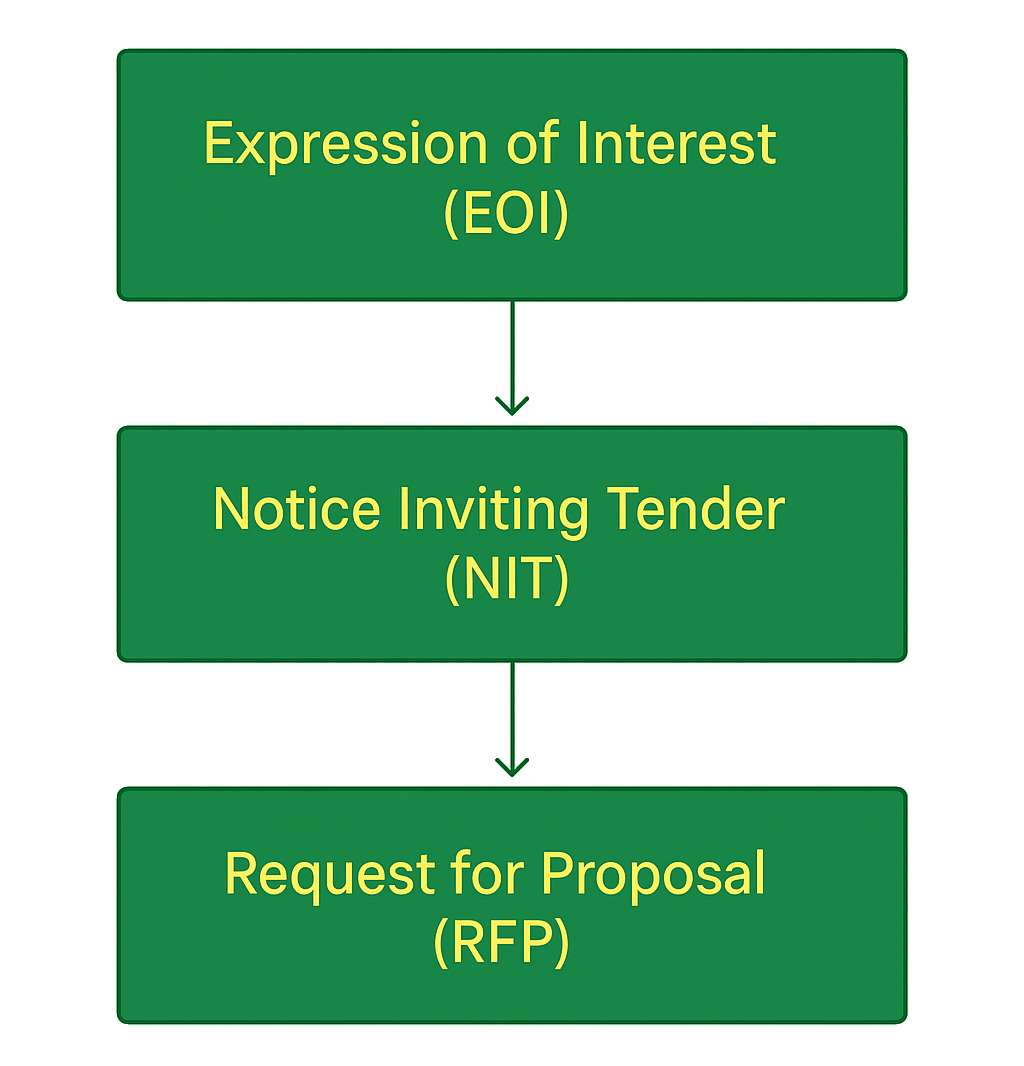
Development of EOI, NIT, and RFP

At BMWv, we understand that a well-drafted tender document lays the foundation for the successful execution of any solid waste management project. We provide end-to-end support to Urban Local Bodies (ULBs), Development Authorities, and State Missions in preparing high-quality, technically sound, and policy-compliant bid documents for engaging implementation partners. 

Our Process Includes

On-ground Assessment & ULB Consultation

Our team first conducts a field visit to the concerned ULB to study their prevailing Solid Waste Management (SWM) practices, infrastructure, manpower deployment, community participation, and ongoing service contracts. This helps us understand real gaps and local context.

SWM System Analysis

We assess the existing system across key parameters — door-to-door collection coverage, segregation practices, processing capacity, vehicle fleet status, GVPs, manpower availability, and ward-wise performance.

Financial & Budget Review

A crucial step involves reviewing the ULB’s current budget allocations, sanitation-related expenditures, available funds under SBM-U 2.0, CSR, and State Schemes. This ensures that the proposed project is financially viable and implementable.

Drafting of Procurement Document

We prepare customized:

  • Expression of Interest (EOI): For identifying eligible and experienced service providers
  • Notice Inviting Tender (NIT): With clear eligibility, scope, timelines, and submission formats
  • Request for Proposal (RFP): Comprehensive document covering:
    • Scope of Work (SOW)
    • Technical & Financial Evaluation Criteria
    • Service Level Agreements (SLAs)
    • Penalty Clauses
    • Contract Terms
    • Performance Metrics aligned with SBM and GFC frameworks

Alignment with Regulatory Frameworks

Every document is aligned with the Solid Waste Management Rules, 2016, Swachh Bharat Mission – Urban 2.0 Toolkit, and State-specific policies to ensure legal robustness and operational clarity.

Support During Pre-Bid & Evaluation Stages

We also assist ULBs in responding to bidder queries, conducting pre-bid meetings, and designing fair evaluation matrices to select the most suitable implementation partner.
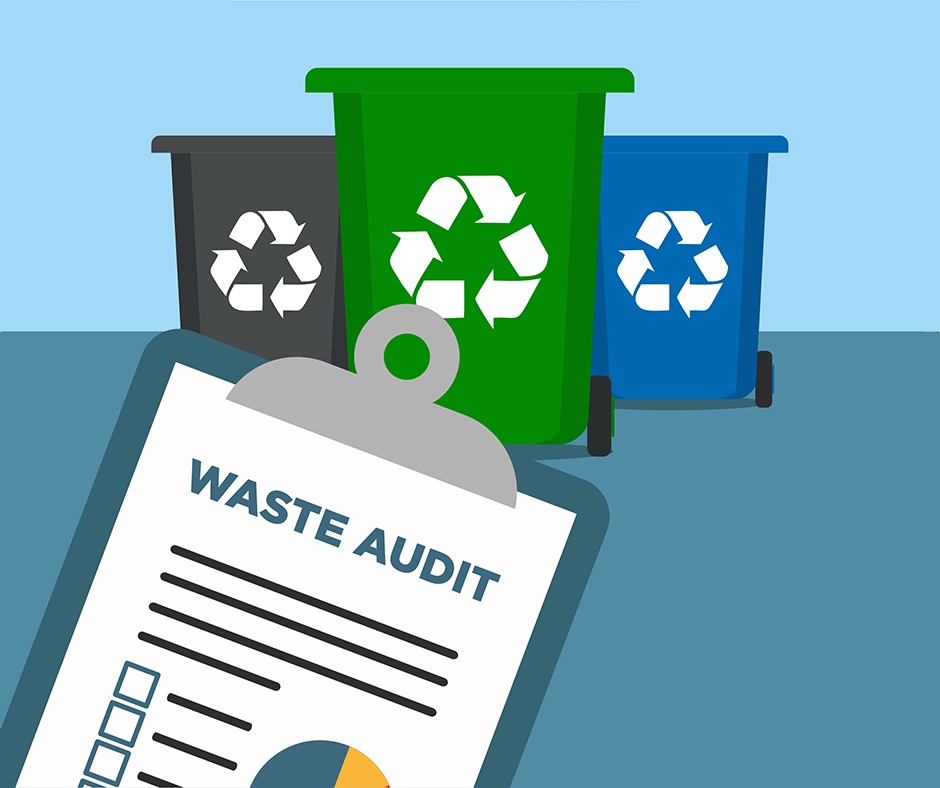
Waste Audit & Compliance Management

At BMWv, we believe that an effective waste management strategy starts with a deep understanding of the current scenario on the ground. Our Waste Audit & Compliance Management service is designed to provide ULBs with a holistic assessment of their existing systems and a roadmap for moving toward ISWM and regulatory compliance. 

Our Approach Includes

Field Visit & Baseline Understanding

Our team initiates the engagement by visiting the ULB and conducting ward-wise assessments of the existing Solid Waste Management (SWM) infrastructure. This includes:

  • Mapping waste generation points such as households, markets, institutions, slums, and bulk generators.
  • Understanding collection and transportation systems — frequency, manpower deployment, and vehicle routing.
  • Identifying operational bottlenecks such as non-compliance, missing infrastructure, illegal dumping sites, or unscientific disposal.

Comprehensive Waste Audit

We conduct a detailed quantitative and qualitative audit of solid waste, focusing on:

  • Daily waste generation rates (wet, dry, domestic hazardous, sanitary)
  • Seasonal variation and waste density analysis
  • Segregation levels at source
  • Assessment of collection efficiency and coverage
  • Material flow mapping from source to final disposal
  • Gaps in processing infrastructure (e.g., MRF, composting units, bio-methanation)
  • Current status of disposal (e.g., open dumping, scientific landfill, legacy waste)

We also evaluate human resource deployment, existing monitoring systems, and citizen behavior.

Compliance Assessment

Our team reviews the city’s alignment with key statutory and policy mandates such as:

  • Solid Waste Management Rules, 2016
  • Plastic Waste Management Rules, 2016
  • Construction & Demolition Waste Rules, 2016
  • Swachh Bharat Mission–Urban 2.0 Guidelines
  • Garbage Free City (GFC) Protocols & Indicators

We assess documentation status, enforcement mechanisms, and readiness for Swachh Survekshan indicators.

Strategic Recommendations & ISWM Guidance

Based on the audit findings, we develop customized recommendations for strengthening waste management systems across:

  • Segregation at source
  • Door-to-door collection system redesign
  • Processing infrastructure planning (MRF, composting, CBG)
  • Decentralized vs centralized approaches
  • GVP elimination strategy
  • IT-enabled monitoring and QR-code-based solutions
  • Community engagement and IEC planning

We also provide detailed guidance on the phased implementation of Integrated Solid Waste Management (ISWM) practices, capacity building of stakeholders, and cost-effective models suited to ULB size and budget.

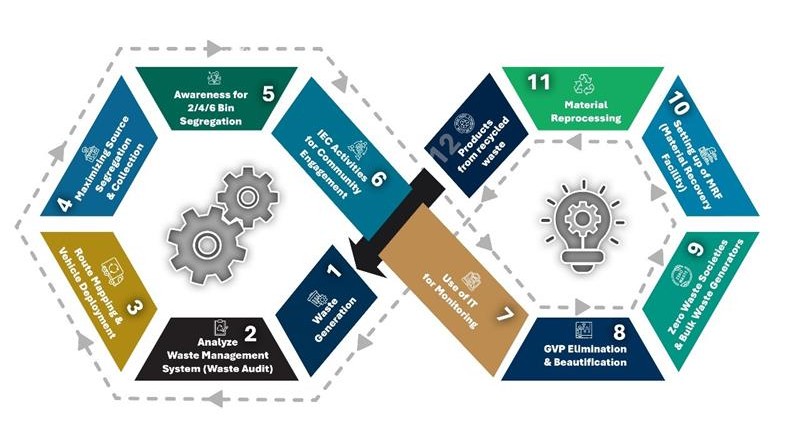
Integrated Solid Waste Management Services

BMWv offers end-to-end ISWM Consulting Services to U/RLBs, urban planners, donor agencies, and city-level authorities seeking to establish or reform their solid waste management systems in alignment with Swachh Bharat Mission–Urban 2.0, SWM Rules, 2016, and state-level sanitation goals.

Our consulting process goes far beyond report-writing — we combine ground-level diagnostics with practical, customized, and scalable solutions.

Our Approach Includes

Field Visit & System Mapping

We begin every engagement with field visits and consultations with the ULB team and sanitation staff. Our objective is to map the existing SWM system end-to-end and understand key operational, institutional, and behavioral gaps. This includes:

  • Reviewing current ward-level infrastructure, coverage, and manpower
  • Studying the waste handling process from generation to final disposal
  • Identifying functional and non-functional assets (vehicles, bins, MRFs, etc.)
  • Analyzing citizen behavior and community participation in segregation
  • Understanding institutional setup and the role of contractors, SHGs, or other stakeholders

System Redesign & Planning

Based on our findings, we prepare a customized ISWM Strategy, which covers:

  • Redesign of the waste collection system – including door-to-door collection routes, pushcart/vehicle requirement, manpower planning, and shift scheduling
  • Bin and segregation model recommendations – 2-bin, 4-bin, or 6-bin system tailored to the city’s context
  • Infrastructure planning – need-based proposal for setting up or upgrading:
    • Material Recovery Facilities (MRFs)
    • Composting Units (Windrow/Organic/Bio-CNG)
    • Transfer Stations
    • Vehicle maintenance workshops
    • Citizen Facilitation Centres
  • Service Level Benchmarking (SLB) – Gap analysis compared to benchmarks and SBM standards

We also develop an implementation roadmap broken into short-term (1-2 Years), medium-term (2-3 Years), and long-term (3-5 Years) interventions.

Operations & Cost Modelling

BMWv prepares a sustainable financial plan for operating and maintaining the ISWM system:

  • Manpower and vehicle costing
  • O&M costs for processing facilities
  • Fuel, spares, and consumables
  • Estimated user charge collection revenue
  • Cost-benefit analysis of decentralized vs centralized systems
  • Potential convergence with CSR, state, or donor funding

We also help identify PPP opportunities for MRF operations, Bio-methanation plants, or plastic recycling units.

Policy & Institutional Strengthening

Our services include advisory on:

  • Restructuring of sanitation departments
  • Creation of separate units for IEC, MRF operations, or GFC readiness
  • Drafting job descriptions, performance appraisal formats, and SOPs
  • Formation of cross-functional monitoring teams within the ULB
  • Developing frameworks for contractor and vendor performance monitoring

Implementation Support

Beyond planning, we assist ULBs in:

  • Preparing DPRs (Detailed Project Reports)
  • Drafting procurement documents for hiring service providers or vendors
  • Handholding during the roll-out of new SWM services
  • Capacity building of sanitation workers and field-level officials
  • Designing MIS tools for real-time tracking of collection, processing, and feedback

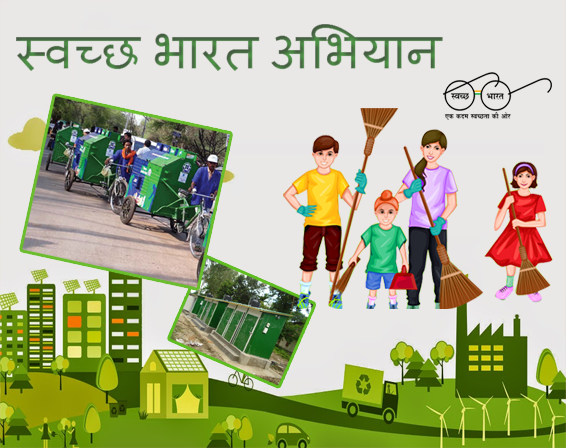
Swachh Bharat Mission & City Sanitation Compliance

BMWv plays a strategic role in supporting Urban Local Bodies (ULBs) in aligning with the goals of the Swachh Bharat Mission – Urban 2.0 (SBM-U) and other state-level sanitation initiatives. Our team brings deep policy knowledge, on-ground operational experience, and proven documentation capabilities to help cities not just comply with SBM mandates — but excel in national benchmarking frameworks like Swachh Survekshan and Garbage Free City (GFC) Star Rating Protocols.

Our Process

Field Engagement & ULB Consultation

Our support starts with field visits and detailed discussions with ULB officials and sanitation teams to understand:

  • Existing SWM and sanitation infrastructure
  • Gaps in compliance with SBM guidelines and GFC protocols
  • Level of community participation and citizen awareness
  • Current performance against Swachh Survekshan indicators
  • Documentation readiness for SBM evidence requirements

We map the city’s strengths, weaknesses, and opportunities, and suggest a phased strategy for improvement.

SBM & Swachh Survekshan Strategy Development

BMWv prepares tailor-made strategic plans for cities to:

  • Achieve 100% door-to-door collection and source segregation
  • Eliminate Garbage Vulnerable Points (GVPs) through engineering and behavioral solutions
  • Achieve 100% processing of collected waste
  • Promote bulk waste generator compliance and zero-waste societies
  • Comply with 1-Star to 7-Star Garbage Free City protocols
  • Prepare city-level Swachhata Action Plans, GFC Scorecards, and Evidence Dossiers as per MoHUA templates

These strategies are actionable, time-bound, and budget-aligned with existing SBM grants or CSR/PPP models.

Documentation & Data Management

BMWv has a dedicated team for handling Swachh Survekshan and SBM documentation, including:

  • Preparing and uploading photographic evidence, reports, and data sets on SBM and GFC portals
  • Creating QR-code based activity logs and citizen engagement records
  • Developing dashboards and report cards for internal tracking by ULBs
  • Designing ward-wise progress tracking formats and IEC documentation systems
  • Conducting mock audits to test the city’s preparedness before official evaluations

We also train ULB staff on how to maintain and update documentation throughout the year.

IEC & Community Engagement Support

BMWv integrates IEC activities with SBM objectives through:

  • Street plays, nukkad nataks, wall art, sanitation drives, and school programs
  • Training RWAs, sanitation workers, and vendors on SBM practices
  • Ward-wise IEC planning aligned to Swachh Survekshan calendars
  • Campaigns for GVP elimination, zero-waste homes, plastic ban enforcement, and public toilet usage
  • Facilitating citizen feedback capture through app-based or survey-based methods

All activities are evidence-backed and indicator-focused to strengthen SBM performance.

Policy Advisory & Institutional Support

Our expert team helps cities:

  • Review and draft sanitation policies, bye-laws, and circulars related to user charges, bulk generators, and plastic ban
  • Set up Swachh Bharat Cells or SBM coordination teams within ULBs
  • Form or restructure IEC, enforcement, and sanitation task forces
  • Conduct training and capacity building programs for ULB staff and field workers
  • Align ongoing projects with SBM 2.0’s convergence goals (AMRUT, Smart Cities, NULM, etc.)

IT-enabled Monitoring Services

In the evolving landscape of urban governance, technology is no longer optional — it is essential. BMWv offers specialized IT-Enabled Monitoring Services to help ULBs digitize their SWM operations, enhance transparency, improve accountability, and enable real-time decision-making.

We partner with experienced technology providers to deploy tailor-made digital solutions that are affordable, scalable, and aligned with SBM protocols.

Our Approach Includes

Needs Assessment & Digital Planning

We begin by conducting an on-ground digital infrastructure and process gap assessment. This includes:

  • Understanding current methods of field data capture (manual vs app-based)
  • Reviewing vehicle movement tracking systems
  • Evaluating waste collection coverage and reporting mechanisms
  • Identifying gaps in MIS (Management Information Systems) for SBM or internal dashboards
  • Studying staff attendance, GVP mapping, complaint redressal, and citizen feedback loops

We then design a customized digital enablement plan based on the ULB’s operational maturity and budget.

Vehicle Tracking & Traffic Monitoring (VTMS)

BMWv supports ULBs in implementing or upgrading Vehicle Tracking & Management Systems (VTMS) that:

  • Enable live GPS tracking of garbage collection vehicles
  • Monitor route deviations, idling, and fuel usage
  • Automate trip logging for secondary transportation
  • Support geofencing of transfer stations, landfills, and processing units
  • Enable data-driven route optimization and zone-wise fleet deployment

Our VTMS services have been successfully deployed in cities like Dehradun through partnerships with IT firms like Brain Above Infosol Pvt. Ltd.

MIS Dashboards & Data Analytics

We help ULBs build and maintain Management Information Systems (MIS) and performance dashboards tailored to:

  • Track key SWM metrics: daily waste collected, segregation %, processing %, number of GVPs eliminated, etc.
  • Generate real-time ward-wise or zone-wise reports
  • Create visual summaries for monthly ULB reviews and SBM reporting
  • Integrate field-level data with SBM 2.0 and GFC portals for evidence upload
  • Analyze trends in manpower deployment, vehicle efficiency, and waste flow

We also train ULB teams to use these dashboards effectively for data-driven governance.

Citizen Engagement & Feedback Systems

BMWv enables ULBs to strengthen citizen-centric governance through:

  • Integration with platforms like Swachhata App, mSBM App, or custom-built grievance redressal apps
  • Use of WhatsApp, SMS, or IVR for sending SWM updates and collecting feedback
  • Dashboards to track grievances, resolution time, and satisfaction scores
  • Public QR posters at MRFs, toilets, and waste points for feedback collection
  • Social media monitoring to identify hotspots and build public trust

These tools support Swachh Survekshan indicators related to citizen feedback, complaint resolution, and digital enablement.

Training, SOPs & Handover Support

We don’t just deploy tech — we build local ownership. Our team supports:

  • Training of ULB staff, sanitation workers, and supervisors
  • SOP creation for system usage, escalation protocols, and report generation
  • Ongoing technical assistance during the first 3–6 months post-deployment
  • Documentation for Swachh Survekshan and SBM dashboards

Current projects by BMWv